the covered wagon
Little House on the PrairieThe covered wagon is the vehicle that carries the Ingalls family on their entire westward journey, from their departure from Wisconsin to their final departure from Indian Territory. It is both a mode of transport and a mobile home, the physical container of the family's domestic life as they cross the American frontier. The wagon frames the entire narrative: the family leaves their little house in Wisconsin inside it, crosses the Mississippi River in it, builds a new life on the prairie from it, and finally leaves that prairie life behind in it. More than a mere conveyance, the covered wagon is the material embodiment of the family's rootlessness and their willingness to trade permanence for possibility.
Construction and Departure from Wisconsin
The covered wagon enters the story as a deliberate construction project. After Pa decided to move west, he sold the little house in Wisconsin and, with Ma's help, made a canvas cover for their wagon. They packed everything they owned into it except their beds, tables, and chairs, which Pa said he could make new ones out West. The wagon was loaded with care: Pa put his gun inside where he could reach it quickly, and he placed his fiddle between two blankets to keep it safe. Their dog Jack went under the wagon, and they drove away, leaving the little house lonely and empty among the big trees, never to see it again. The wagon thus begins its journey as a vessel of both practical necessity and hopeful aspiration, carrying the family's essential possessions while leaving behind the furniture of settled life.
The departure was a family affair conducted in the dark. The next morning, while it was still dark, Ma gently shook Mary and Laura until they got up, and by the light of the fire she helped them dress warmly in warm dresses and heavy coats. Grandmother, Grandfather, aunts, and uncles were all there to say good-bye. The wagon was the centerpiece of this farewell scene, the object that would carry the family away from all their relatives and into the unknown West.
The Long Journey Across the Frontier
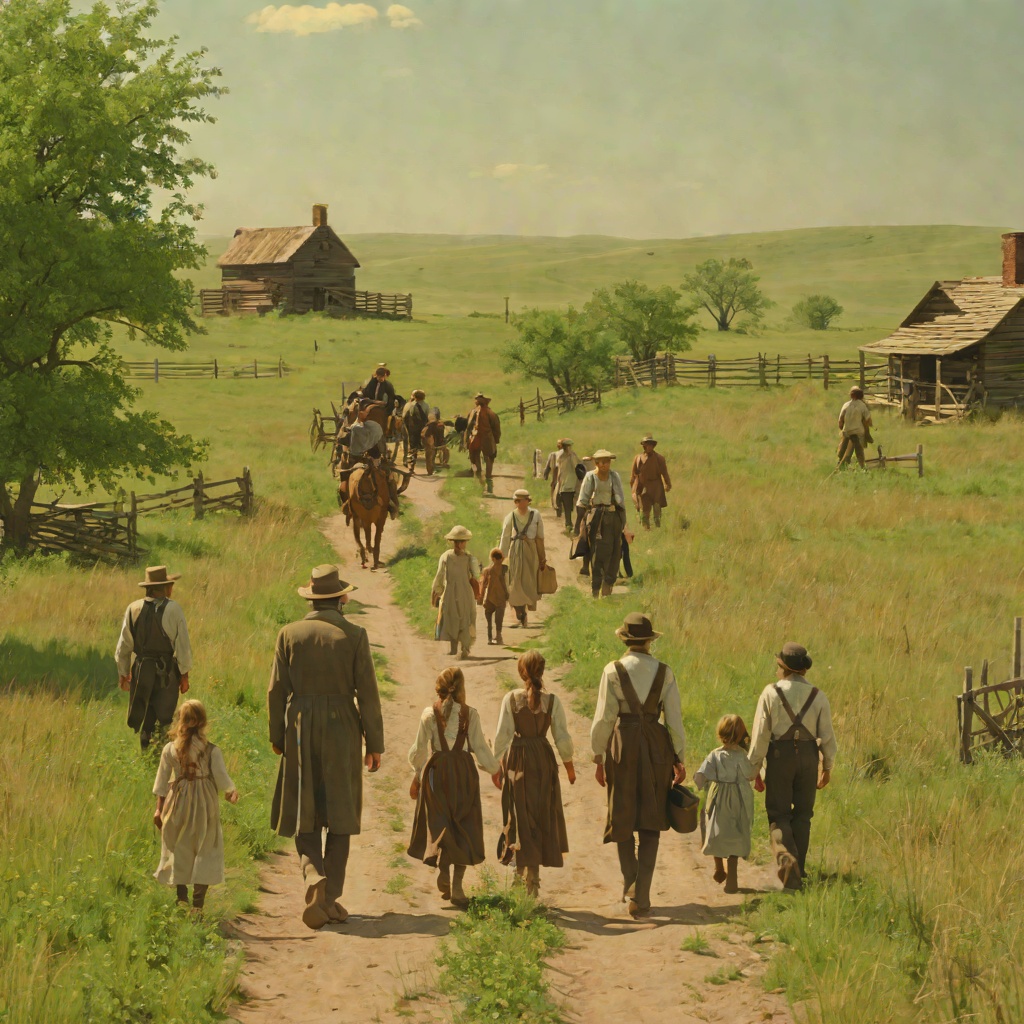
The covered wagon was the family's home for the long, long way to Indian country. Almost every day the horses travelled as far as they could, and almost every night Pa and Ma stopped in a new place. They rode across the wide Mississippi River before the ice broke and crossed many other rivers and creeks. The wagon carried them across Wisconsin, Minnesota, Iowa, and Missouri, and then into Kansas, an endless flat land covered with tall grass. Day after day they saw nothing but grass and a big sky, with nothing new to do and nothing new to look at.
Inside the wagon, the family maintained their domestic order. Pa sat up front, holding the reins. Ma sat next to him, straight and quiet. Baby Carrie slept in soft blankets in the back. The wagon was also a place of discipline and obedience. When Laura complained that her legs were tired and asked to get out and run behind the wagon, Ma simply said, "No, Laura." When Laura said she was hungry and wanted to camp, Ma said only, "Laura," and Laura understood she should stay quiet. The wagon was thus not only a physical space but a social one, where the rules of the household continued to apply even in motion.
The wagon was also the site of one of the family's most dangerous moments. When they crossed a flooded creek, the wagon lifted and rocked in the water. Ma shouted, "Lie down, girls! Don't move!" and Mary and Laura dropped flat on the bed, obeying her immediately. Ma's arm pulled a blanket over them, heads and all. Laura felt the wagon turning, and the water made so much noise. Then Pa's voice frightened Laura: "Take the horses, Caroline!" Suddenly Pa was gone, and Ma sat alone holding the reins with both hands. Laura sat up and looked out, seeing nothing but water everywhere and three heads in the water—Pet's head, Patty's head, and Pa's small wet head. Pa's hand was holding Pet's head and he was talking calmly to the horses. Ma's face was white and frightened, Mary was crying, and Laura felt cold and sick. For a long time the wagon rocked in the water. Finally the front wheels hit the ground, and Pa shouted as the wet horses climbed out of the water. The wagon had carried them through the crisis, but only barely.
From Mobile Home to Stationary Shelter
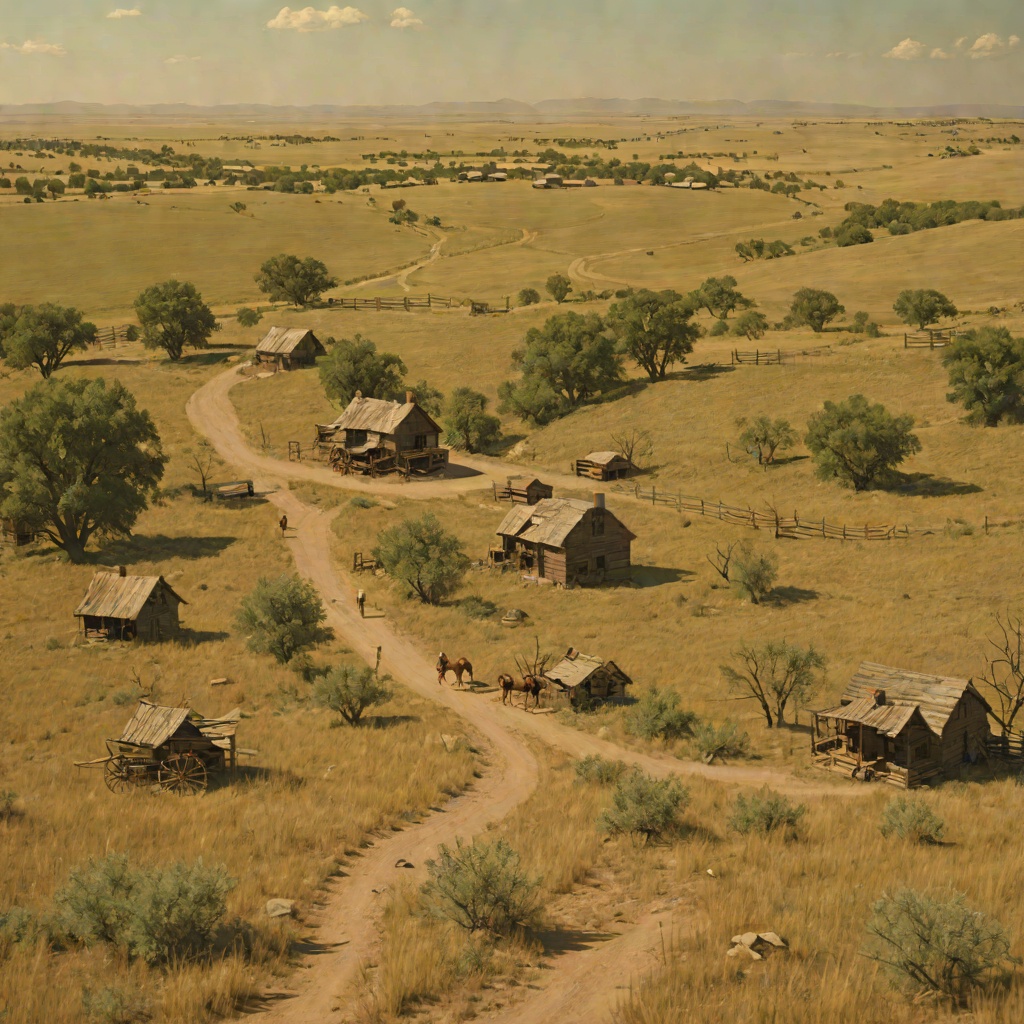
The covered wagon's role changed dramatically when the family reached their destination. Before noon one day, Pa stopped the wagon on the prairie and said, "Here we are, Caroline! We'll build our house right here." The wagon had brought them to their new home, and now it would be transformed. After breakfast, Pa got on top of the walls of the new house to put the canvas wagon cover over it. The canvas blew wildly in the wind, and so did Pa's hair; once he almost flew away into the air like a big bird. But he finally tied the canvas down. The wagon's canvas cover, which had sheltered the family on the road, now became the roof of their new house. The wagon itself was thus recycled into the permanent structure it had helped the family reach.
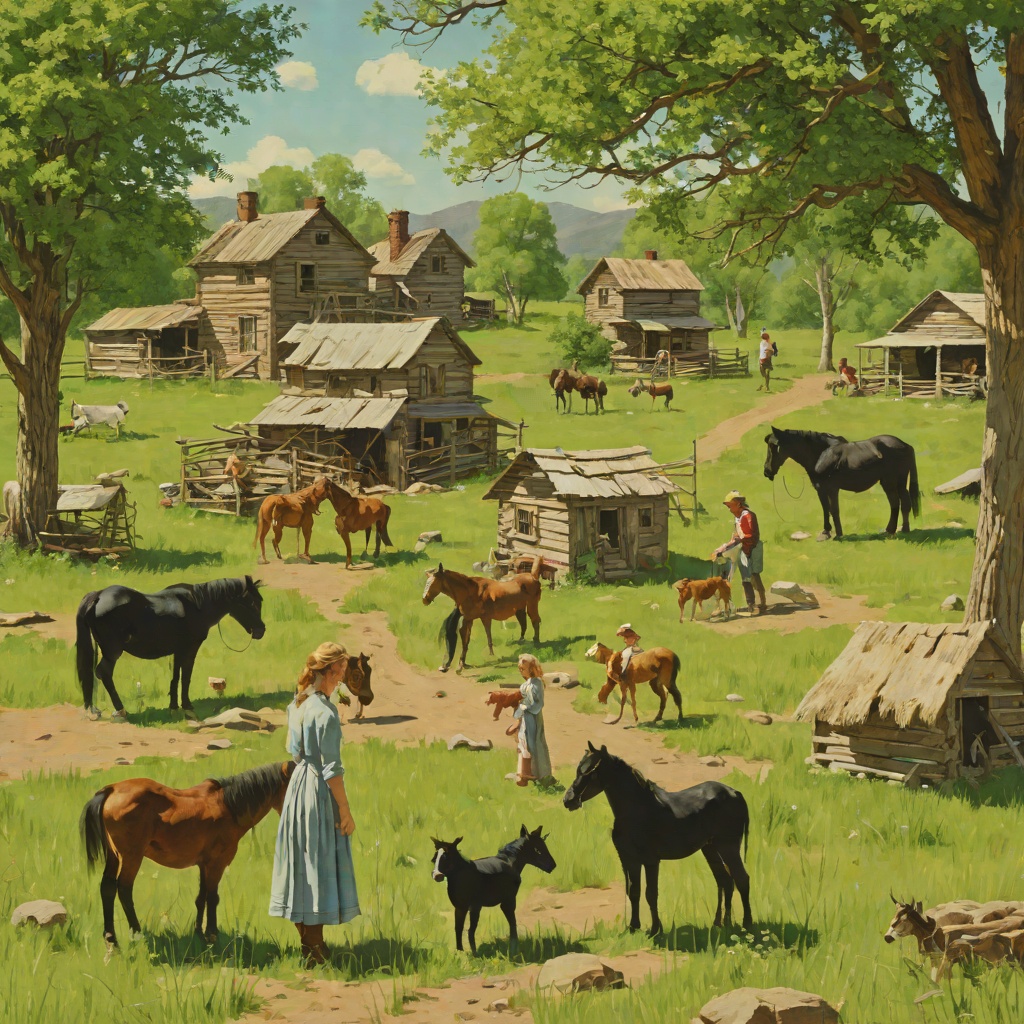
The wagon's contents continued to shape the family's new life. The beds that had been laid in the wagon became beds made on the floor of the new house. The wagon had carried the seeds that Pa bought in Independence, along with brown sugar, coffee, cornmeal, and salt, and the pretty cotton cloth for Ma to make herself a dress. It had carried the bundle of furs that Pa was saving to trade next spring in Independence, furs that grew bigger every day as Pa hunted. The wagon was the original container of all the family's material life, and its contents dispersed into the new household.
The Wagon as a Symbol of Departure and Rootlessness
The covered wagon returns to prominence at the end of the story, when the family must leave their little house on the prairie. Pa began to put the canvas cover on the wagon, and Laura and Mary knew it was true: they really were going away. The next morning, Pa and Ma packed the wagon. First Ma laid two beds across the back of the wagon. Then she and Pa packed the clothes, the food, and the dishes. The only thing they could not take was the plough. The wagon was thus the measure of what the family could carry and what they had to abandon.
Laura and Mary climbed into the wagon and sat on the bed in the back. Ma put Baby Carrie between them, then climbed to her place on the seat. Suddenly Laura wanted to see the house again, so Pa opened the back of the wagon cover, and Mary and Laura looked out at their little log house. Pa climbed to his place beside Ma and took the reins in his hands. Jack went under the wagon, and Pet and Patty walked away from the little house on the prairie. As far as they could see, to the east and to the south and to the west, nothing was moving; only the green grass was waving in the wind.
The wagon's final journey is marked by the same mixture of loss and hope that characterized its first. Pa said, "It's a great country, Caroline. But there will be wild Indians and wolves here for many years." Pa and Ma were still and silent, and Mary and Laura were quiet, too, but Laura felt all excited inside. The narrative closes with a reflection on the wagon's essential meaning: "You never know what will happen next, nor where you will be tomorrow, when you are travelling in a covered wagon." The covered wagon is thus the symbol of the family's perpetual motion, their willingness to embrace uncertainty, and their acceptance that home is not a place but a journey. The wagon carries them away from the little house they built with their own hands, just as it carried them to it, and the family's identity is defined by this endless cycle of building and leaving, of settling and moving on.